AI is changing how businesses plan, edit, and publish video content. Tools can now turn scripts, voiceovers, podcasts, webinars, and long recordings into structured visual clips, captions, social formats, and multilingual assets much faster than traditional editing alone. For content teams under pressure to publish more consistently, this is a real workflow advantage.
But faster does not always mean better. A video can be technically edited, captioned, and formatted while still feeling generic, off-brand, emotionally flat, or strategically weak. That is why the real question is not whether AI should replace video teams. The better question is where AI video production workflows should support the process, and where human-led video production is still essential.
The trend: AI is becoming part of the video workflow, not just a novelty
Recent developments show that AI video tools are moving beyond simple effects or auto-editing. They are increasingly being used as workflow systems for repurposing podcasts, turning audio into short videos, generating visual sequences from scripts, creating social media versions, and speeding up repetitive production tasks.
For businesses, this matters because video demand has increased across websites, social media, paid campaigns, internal communication, product education, recruitment, and customer support. A single brand video is no longer enough. Teams now need multiple formats, cutdowns, captions, thumbnails, vertical edits, platform-specific versions, and follow-up content.
This is where AI video editing can help. It can reduce production bottlenecks, automate parts of the content workflow, and make it easier to turn one recording into many usable assets. However, AI still needs direction, quality control, brand judgement, and a clear communication strategy.
When AI-assisted video editing works best
AI is strongest when the content already exists and the main task is to organise, shorten, format, caption, translate, or repurpose it. It is especially useful for routine business content where speed and consistency matter more than cinematic production.
Use AI-assisted workflows for:
- Repurposing long-form content: Webinars, podcasts, talks, interviews, training sessions, and presentations can be converted into shorter clips for social media and email campaigns.
- Creating captioned social videos: AI can help generate captions, identify highlights, and format clips for platforms such as LinkedIn, Instagram, TikTok, and YouTube Shorts.
- Internal communication: Staff updates, process explainers, onboarding videos, and quick training clips often benefit from speed more than heavy production.
- Content testing: Teams can quickly test different hooks, thumbnails, edits, and formats before investing in a larger campaign.
- Multilingual or accessibility support: AI can assist with transcripts, subtitles, translations, and audio-to-video formats, with human review for accuracy and tone.
In these cases, AI does not need to create the full brand story. It simply helps the team move faster through repetitive editing and formatting tasks.
When human-led video production is still the better choice
Human-led production is strongest when the video needs strategic thinking, emotional clarity, trust, brand personality, visual direction, or real-world context. This includes campaign videos, founder stories, customer testimonials, product launches, documentary-style content, website hero videos, recruitment videos, and premium social media assets.
These videos depend on decisions that are difficult to automate well: what story should be told, what should be left out, how people should be filmed, how the brand should feel, what emotion the audience should take away, and how the video connects to the wider business goal.
Use human-led production for:
- Brand storytelling: A business story needs voice, pacing, visual identity, and emotional judgement.
- Interviews and testimonials: Real people need thoughtful questions, comfortable direction, strong framing, and careful editing.
- Campaign content: Launch videos, awareness campaigns, and paid ads need concept development, scripting, shot planning, art direction, and performance goals.
- Website and sales assets: Videos placed on a homepage, landing page, proposal, or product page must feel polished and aligned with the brand experience.
- High-trust industries: Professional services, education, healthcare, finance, property, and B2B brands often need credibility, clarity, and human nuance.
AI can support these productions, but it should not lead the creative decision-making. A strong human-led process protects the brand from looking like every other automated video template online.
A practical decision framework for businesses
Before choosing AI editing or full production, ask five simple questions.
- What is the goal? If the goal is frequent content output, use AI support. If the goal is trust, conversion, or brand positioning, lead with human production.
- Does the footage already exist? If yes, AI can help repurpose it. If no, you may need filming, scripting, direction, lighting, and a production plan.
- How important is emotional impact? The more emotion, trust, or storytelling involved, the more human direction matters.
- Where will the video be used? A quick LinkedIn clip can be AI-assisted. A homepage hero video, campaign film, or client-facing proposal video needs more polish.
- What level of brand risk is acceptable? AI-generated visuals, captions, stock-style sequences, or automated edits should always be reviewed for accuracy, tone,
right concerns, and brand fit.
The best approach is usually hybrid
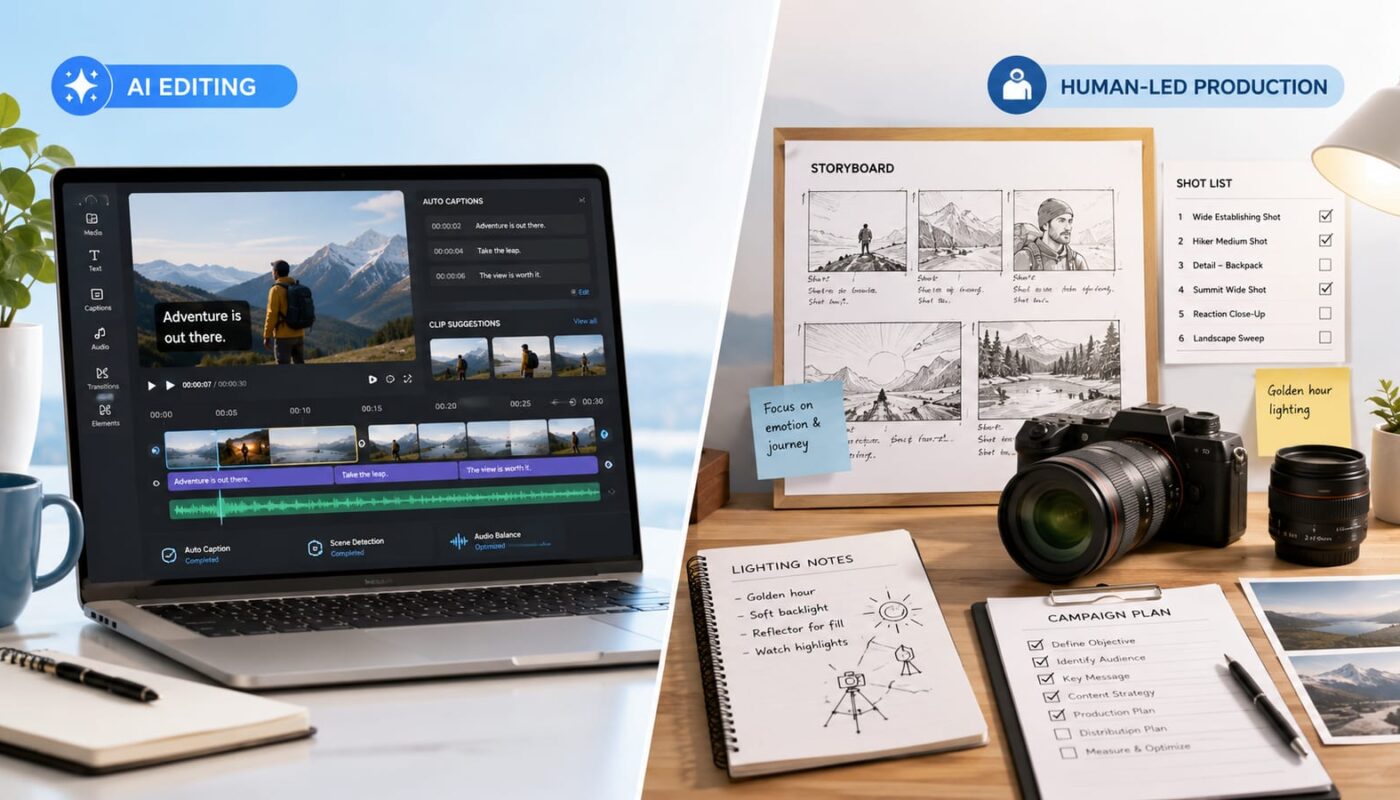
For most businesses, the smartest route is not AI versus humans. It is a hybrid content workflow. Human teams define the strategy, message, brand direction, and quality standard. AI tools then assist with editing, transcription, captions, formatting, versioning, and repurposing.
A strong hybrid workflow might look like this: plan the content themes, film or record the core material, use AI to generate transcripts and first-cut clips, review the strongest moments, refine the edit manually, adapt the content for different platforms, then measure what performs best. This gives the business both speed and control.
The key is to avoid treating video automation as a shortcut around strategy. AI can accelerate production, but it cannot replace clear positioning, thoughtful storytelling, good visuals, and a strong understanding of the audience.
Practical workflow advice for content teams
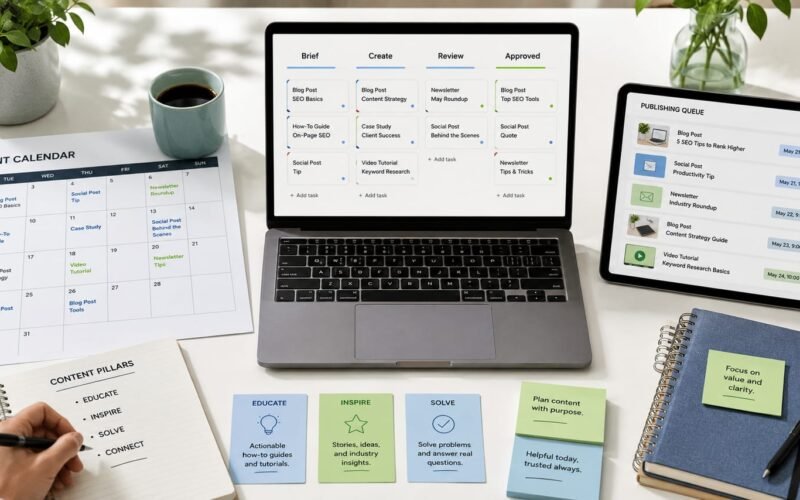
- Build a repeatable video content workflow before adding tools.
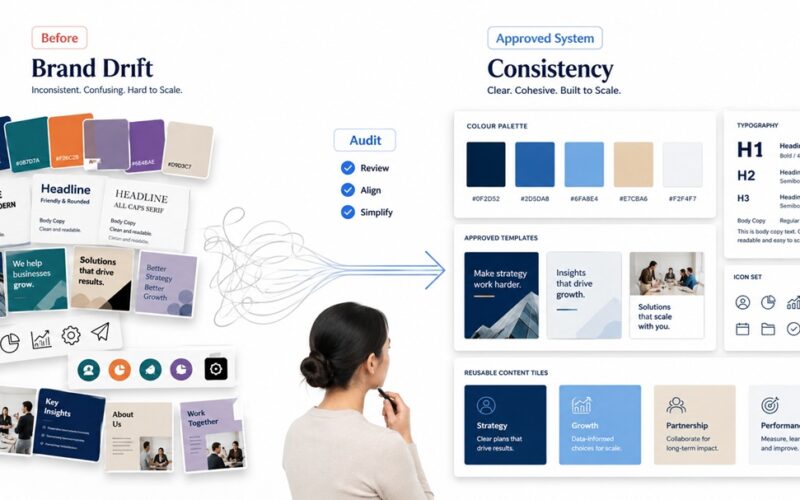
- Create brand rules for captions, colours, typography, music, pacing, and tone.
- Use AI for first drafts, not final judgement.
- Review every AI-assisted edit for accuracy, context, and brand quality.
- Separate routine content from campaign content so each gets the right production level.
- Keep a library of approved footage, interviews, product shots, b-roll, intros, outros, and templates.
AI video production workflows are becoming an important part of modern business video production, especially for teams that need more content without overloading their internal resources. But the strongest results come from combining automation with human creative direction.
Digivolve Media helps businesses plan, produce, edit, and scale video content through practical workflows that connect strategy, production, automation, websites, and digital platforms. The goal is not just to create more videos, but to create the right videos with the right process behind them.