Choosing between stock photos vs custom business photography is not only a design decision. It affects how clearly your company communicates, how trustworthy your website feels, how flexible your content team becomes, and how consistent your brand appears across digital platforms.
Stock photos are fast, affordable, and useful when a team needs supporting visuals quickly. Custom photography is more specific, more recognisable, and better aligned with the real people, products, spaces, services, and processes behind a business. The strongest online presence often uses both, but with a clear decision framework instead of random image selection.
The main difference: availability versus authenticity
Stock photos solve an availability problem. They give your team instant access to polished visuals for blog posts, presentations, social media graphics, email campaigns, and placeholder website sections. For companies producing content at scale, this can be helpful because not every post needs a full photoshoot.
Custom business photography solves an identity problem. It shows your actual work, team, products, environment, service experience, and brand personality. When a potential customer visits your website, they are not only judging the layout. They are asking whether this company looks real, capable, organised, and relevant to their needs.
When stock photos are acceptable
Stock photos for business can work well when the visual is supporting the message rather than proving the company’s credibility. For example, a general blog article about planning, productivity, communication, or digital trends may not always need original photography. A carefully selected stock image can provide mood, context, or visual rhythm without carrying the full weight of the brand.
Stock images are also useful during early-stage website planning, campaign mockups, pitch decks, internal documents, and quick social media content where speed matters. They can help a team test layouts before investing in a shoot. They can also fill small gaps in a wider content library, especially for abstract concepts such as strategy, technology, automation, or planning.
The risk begins when stock photos become the main visual identity of the business. If every service page, landing page, advert, and social media post looks like it could belong to any company, the brand becomes harder to remember. Generic visuals may look professional at first glance, but they often fail to communicate what makes the company specific.
When custom photography is essential
Custom brand photography becomes essential when the image needs to build trust, explain a real offer, or show the company’s actual value. Your home page hero image, about page, team section, product pages, service process, case studies, facility photos, event coverage, and campaign landing pages usually need visuals that belong to your business.
For website photography, custom images are especially important on pages where customers make decisions. A service page that shows your real process can feel more credible than a generic image of people in a meeting. A product page with original detail shots can answer questions faster than a stock image that only suggests a category. A recruitment page with real workplace visuals can communicate culture more clearly than a staged office scene.
Custom photography also gives content teams reusable material. A well-planned shoot can produce hero images, portrait crops, behind-the-scenes visuals, product details, vertical social media photography, horizontal website banners, campaign images, and internal presentation assets. The value is not only in the shoot itself, but in how many useful content formats it creates.
A practical decision framework
Before choosing stock or custom visuals, ask what the image needs to do. If it only supports a general idea, stock may be enough. If it needs to prove credibility, explain a service, show a product, represent your team, or build recognition, custom photography is the stronger choice.
Use stock photos when:
- The topic is broad, educational, or conceptual.
- The image is used as a background or supporting visual, not as evidence.
- The content has a short lifespan, such as a quick announcement or internal draft.
- Your team needs temporary visuals while a custom shoot is being planned.
- The selected image matches your brand style and does not look overly staged.
Use custom photography when:
- The page or campaign is central to sales, trust, recruitment, or brand positioning.
- The image must show your real team, product, location, service, or process.
- You need reusable assets for your website, social media, proposals, and campaigns.
- Your competitors are using similar generic visuals and you need to stand apart.
- Your content workflow needs a consistent brand photo library.
How to combine both without weakening your brand
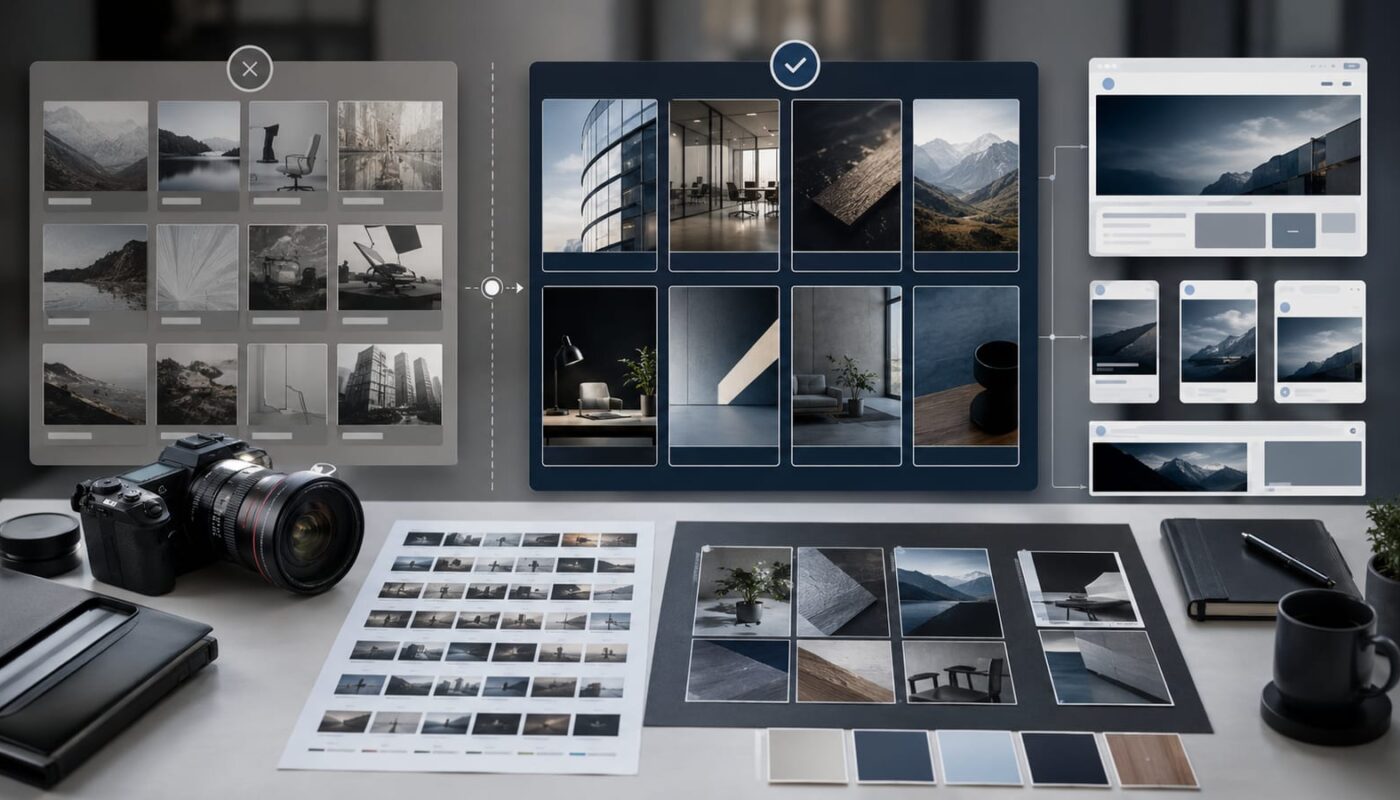
The best approach is not to ban stock photos completely. Instead, give each type of image a role. Custom photography should form the core of your visual identity. Stock images should support secondary content where original visuals are not practical or necessary.
Start by building a small custom image library around your most important business touchpoints: leadership, team, products, services, workspace, process, customer experience, and campaign themes. Then define where stock can be used, such as blog thumbnails, abstract concept posts, internal presentations, or temporary campaign layouts.
To keep both sources consistent, create simple visual rules. Decide on preferred lighting, colour tone, crop style, background style, level of realism, and subject matter. Avoid stock images that feel disconnected from your industry, location, audience, or service level. Even when the image is not custom, it should still feel like it belongs in your brand world.
Workflow advice for content teams
Companies improving their online presence should treat photography as part of the content workflow, not as a last-minute decoration. Create folders for website images, social media photography, campaign photography, team portraits, product images, brand textures, and archived visuals. Add usage notes so your team knows which images are current, approved, outdated, or reserved for specific campaigns.
When planning a custom shoot, think beyond one page. Capture horizontal website banners, square social crops, vertical story formats, close-up details, wide environmental shots, clean background images, and behind-the-scenes visuals. This makes one shoot more useful across multiple digital content visuals and reduces the pressure to keep searching for generic alternatives.
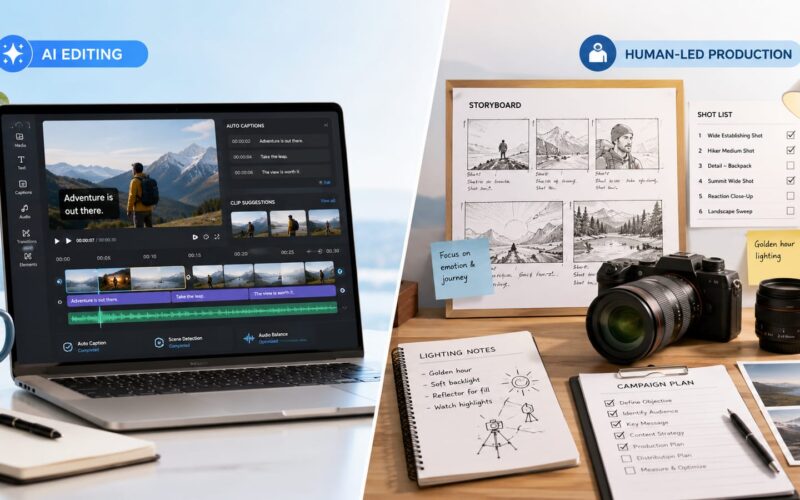
For companies using AI tools, automation, or content systems, organised original photography becomes even more valuable. A clean image library with approved visuals, clear categories, and consistent styling can support faster content production without losing brand control.
The practical answer
Use stock photos for speed, scale, and supporting content. Use custom business photography for trust, identity, differentiation, and high-impact digital assets. The strongest online presence comes from knowing which role each visual type should play.
Digivolve Media helps businesses plan and produce digital content systems that connect photography, websites, campaigns, social media, automation, and brand communication. For companies that want better visuals without a messy workflow, the right strategy is not more images. It is a clearer system for choosing, creating, organising, and using them well.