A tyre marketplace, engineered.
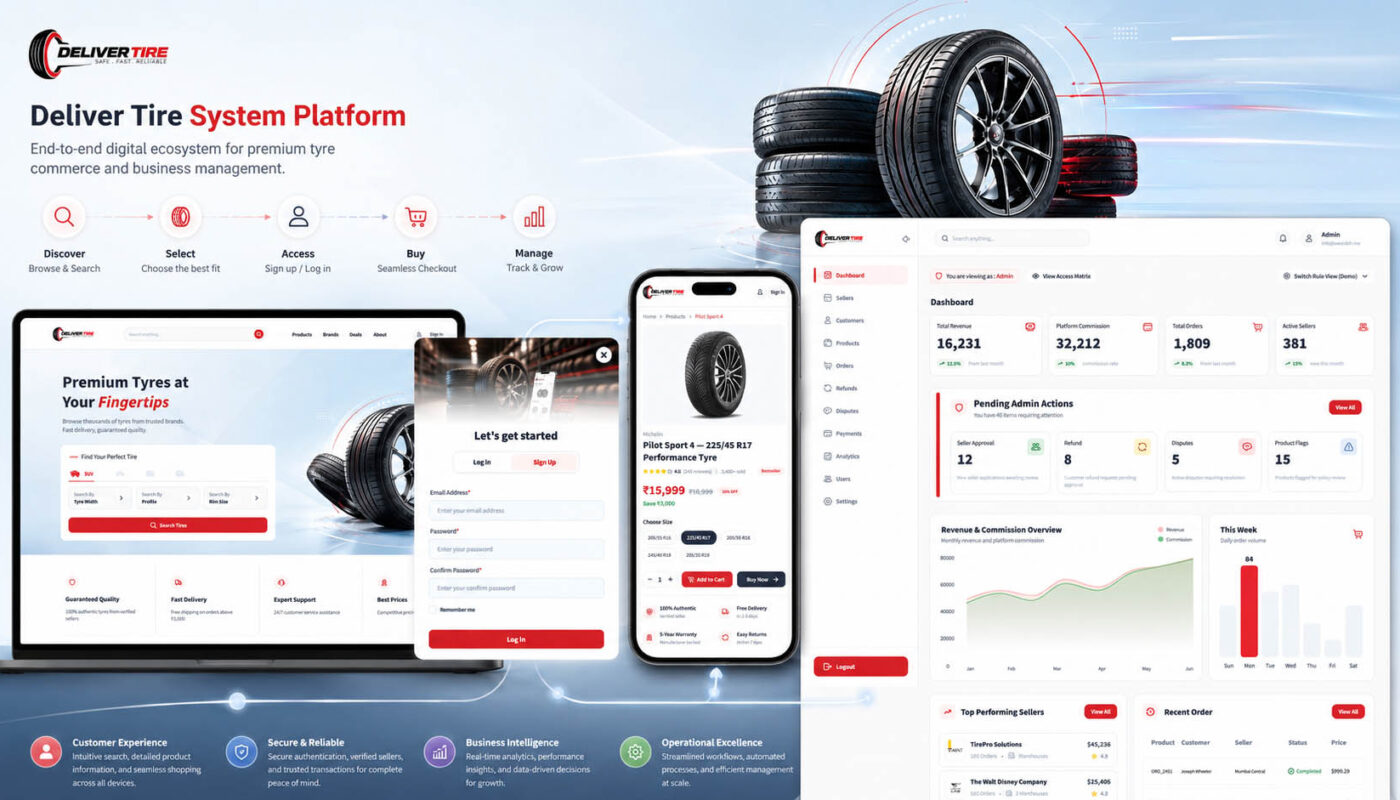
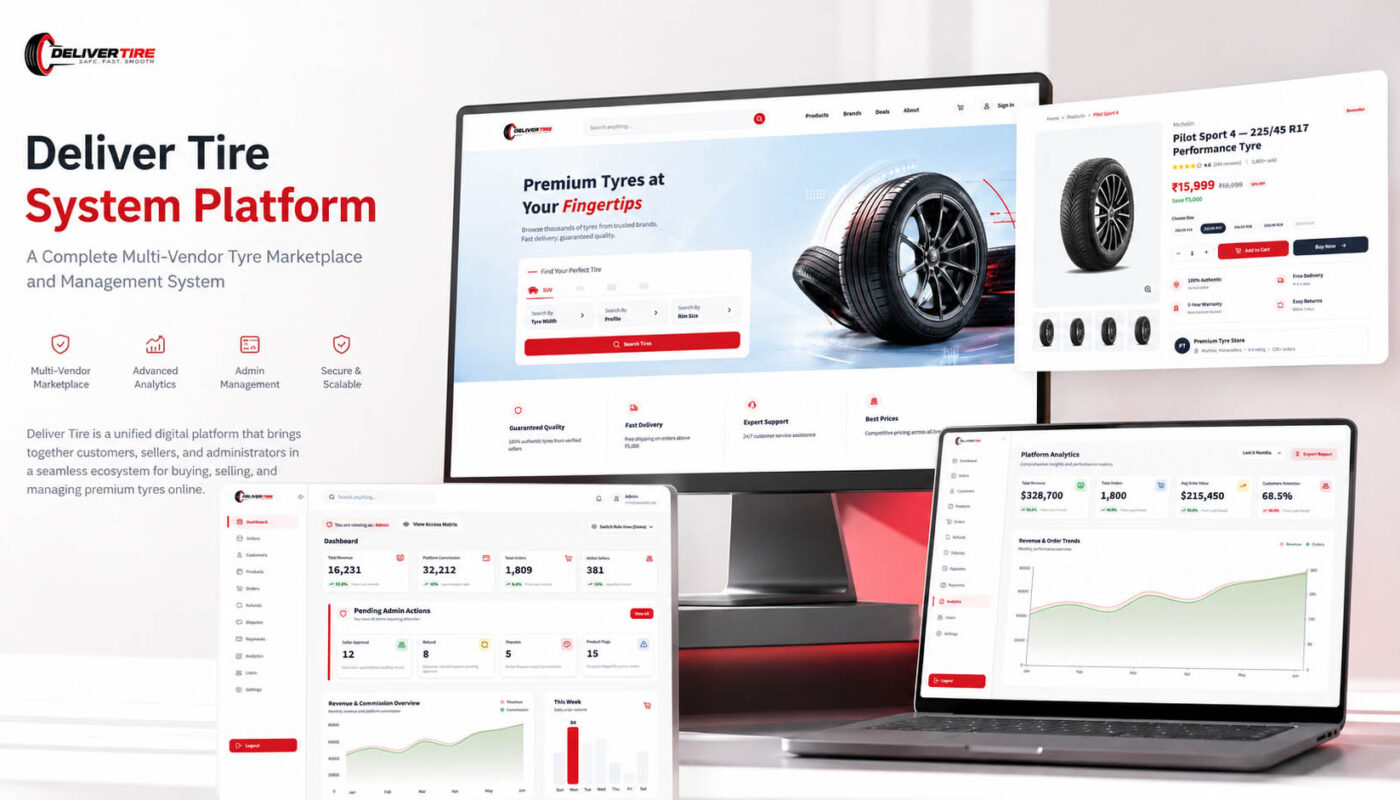
We designed and built Deliver Tire end-to-end — a multi-vendor commerce platform where customers buy premium tyres from trusted sellers, sellers manage stock across warehouses, and administrators oversee the entire operation from a single dashboard.

The challenge
The tyre retail market is fragmented. Independent sellers operate their own inventory, warehouses, and pricing — but customers want one place to compare brands, check availability, and order with confidence. Deliver Tire needed a platform that could serve both sides: a polished customer-facing storefront and a comprehensive operational backend, without compromising either.
The brief was to design and build the full digital ecosystem from the ground up — brand, storefront, seller tools, and administrative control — and have it ready to scale from day one.
A storefront built around the buyer
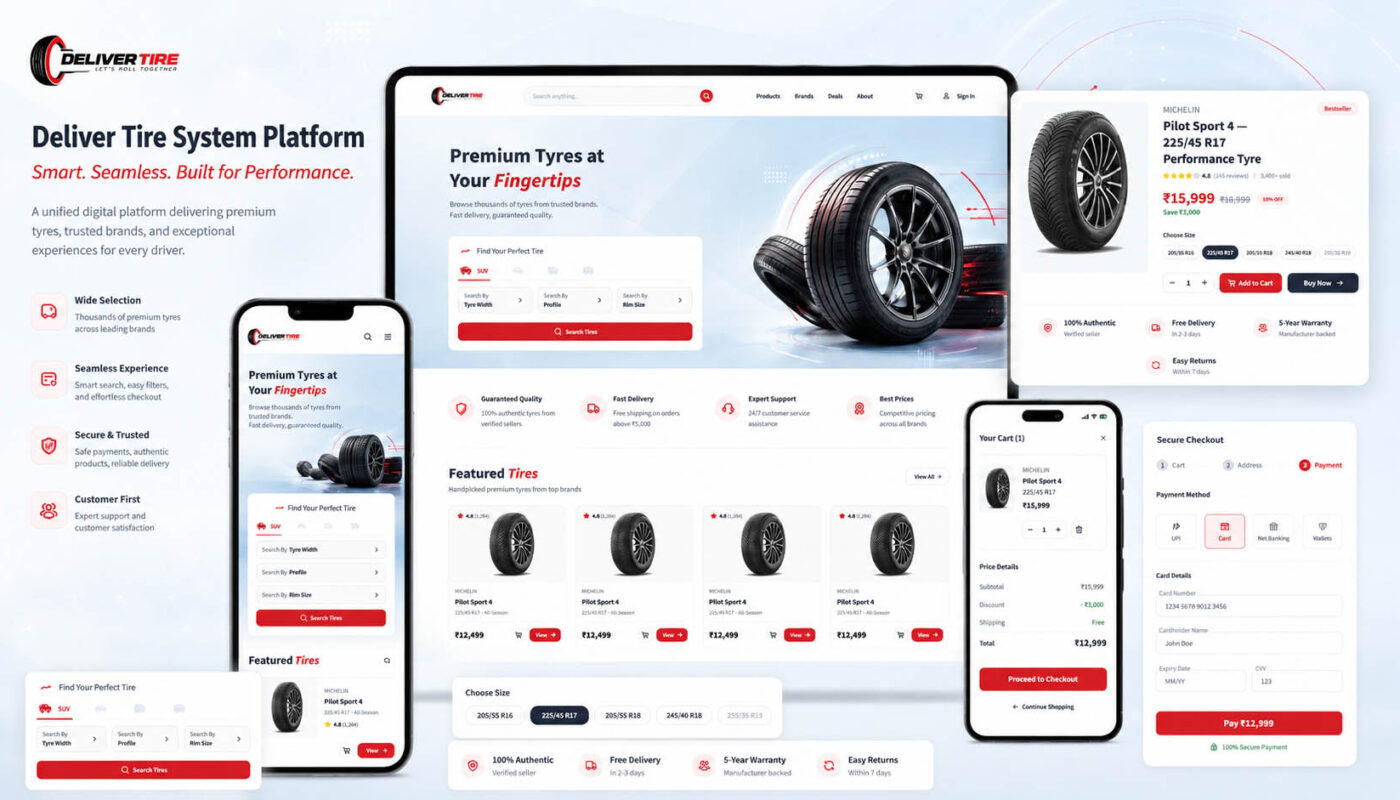
The customer journey is straightforward by design: discover, compare, buy, track. Buyers can search by tyre width, profile, and rim size, browse curated featured collections, or filter by brand. Product pages surface the details that actually matter — verified seller, delivery window, warranty backing, return policy — so the decision feels safe even on a high-ticket purchase.
The checkout is built for trust. Address, payment, and confirmation flow in three clear steps; price details show subtotal, discount, and shipping transparently before payment. The same experience adapts cleanly across desktop, tablet, and mobile — particularly important in a category where many buyers research on one device and complete the purchase on another.
Multi-vendor at the core
Behind every product on the storefront sits an independent seller with their own catalogue, pricing, and stock. The seller dashboard gives them everything they need to operate: product management, inventory tracking, order fulfilment, refunds and disputes, and integrations with their existing logistics tools — all from one interface.
The platform supports multi-warehouse fulfilment, where each seller can register multiple warehouse locations. Each warehouse has its own stock levels and shipping origin, so customers see accurate availability and realistic delivery costs based on where their order will actually ship from. This single architectural decision unlocks regional sellers who couldn’t otherwise compete on delivery speed against larger national players.
Full operational control for administrators
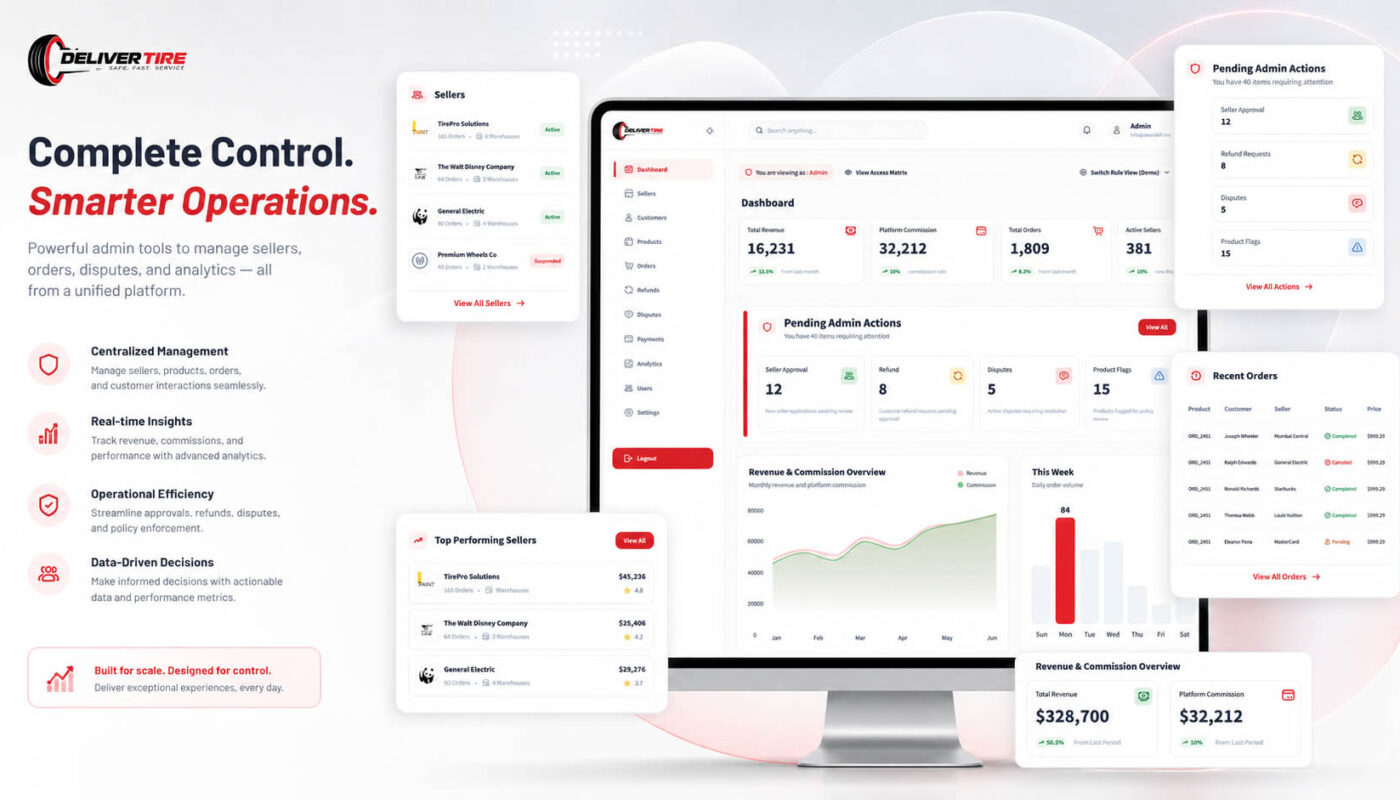
The admin layer is where Deliver Tire stops being just an e-commerce site and becomes an operations platform. From the admin dashboard, the platform team can approve new sellers, review flagged products, mediate disputes, process refunds, manage payments and commissions, and configure user permissions across the entire system.
Every action surfaces in real time. Pending seller approvals, refund requests, and active disputes sit at the top of the dashboard so nothing slips through. A “View as Admin” mode lets the team see the platform exactly as a customer or seller would — useful for support cases and for verifying that policy changes have rolled out correctly.
Analytics that drive decisions
Numbers without context are noise. The analytics layer in Deliver Tire is structured around the questions the business actually asks: Which sellers are growing? Which product categories are converting? Where are orders falling out of the funnel?
Revenue and order trends, category mix, order status distribution, and a ranked seller performance leaderboard all sit on a single screen. Each chart drills into deeper detail without leaving the dashboard, and reports can be exported for board reviews or seller payouts.
Built to scale
Every architectural choice — the multi-warehouse model, the modular seller onboarding, the role-based permissions, the analytics that surface decisions rather than just data — was made with growth in mind. Deliver Tire isn’t a snapshot of a launch; it’s the foundation for a marketplace that can add sellers, expand regions, and onboard new product categories without rebuilding the core.
Fourteen weeks from kickoff to a complete, production-ready platform: 80 pages designed and built, 55 distinct features, three fully-realised user roles, and an operational backbone ready for whatever comes next.