A travel platform, culturally fluent.
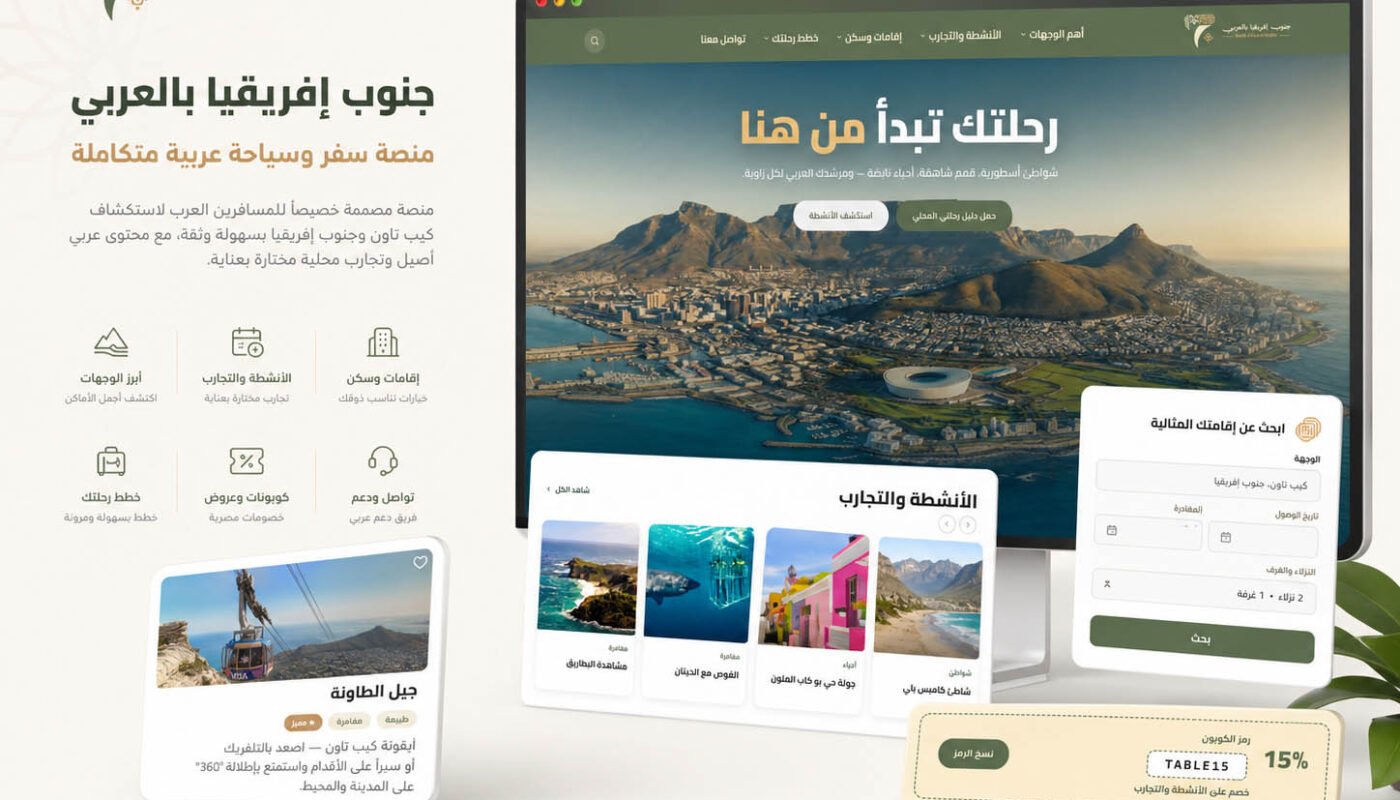
We built South Africa in Arabic as an Arabic-first travel platform — not a translated version of an English site, but a destination guide designed natively right-to-left, typeset in Cairo, and written by people who understand both Arabic travellers and South Africa.
The brief
South Africa attracts a growing number of Arabic-speaking visitors — particularly from the Gulf states — looking for something different from European or East Asian holidays. But the digital infrastructure to serve those travellers hasn’t kept up. Most tourism sites about South Africa are English-only, or worse, machine-translated into Arabic and full of the awkward syntax that signals “we didn’t think this was important.” We were brought in to build a platform that did.
The goal: a trusted Arabic-language gateway to Cape Town and South Africa, designed with the same craft as any English-first travel platform — and held to the same standard.
Right-to-left, the right way
RTL is not a CSS flag. It’s an architectural decision that shapes every interface choice. Reading order, navigation flow, button placement, icon orientation, even the direction a carousel arrow points — all of it has to flip cleanly without feeling like an English layout that’s been mirrored under duress.
We built the platform RTL-first. Every component was designed and engineered with Arabic reading direction as the default, not an afterthought. Typography is set in Cairo — a modern Arabic typeface that holds well at every size and pairs respectfully with the brand’s olive-and-cream palette. The result feels native, not adapted.
Content written, not translated
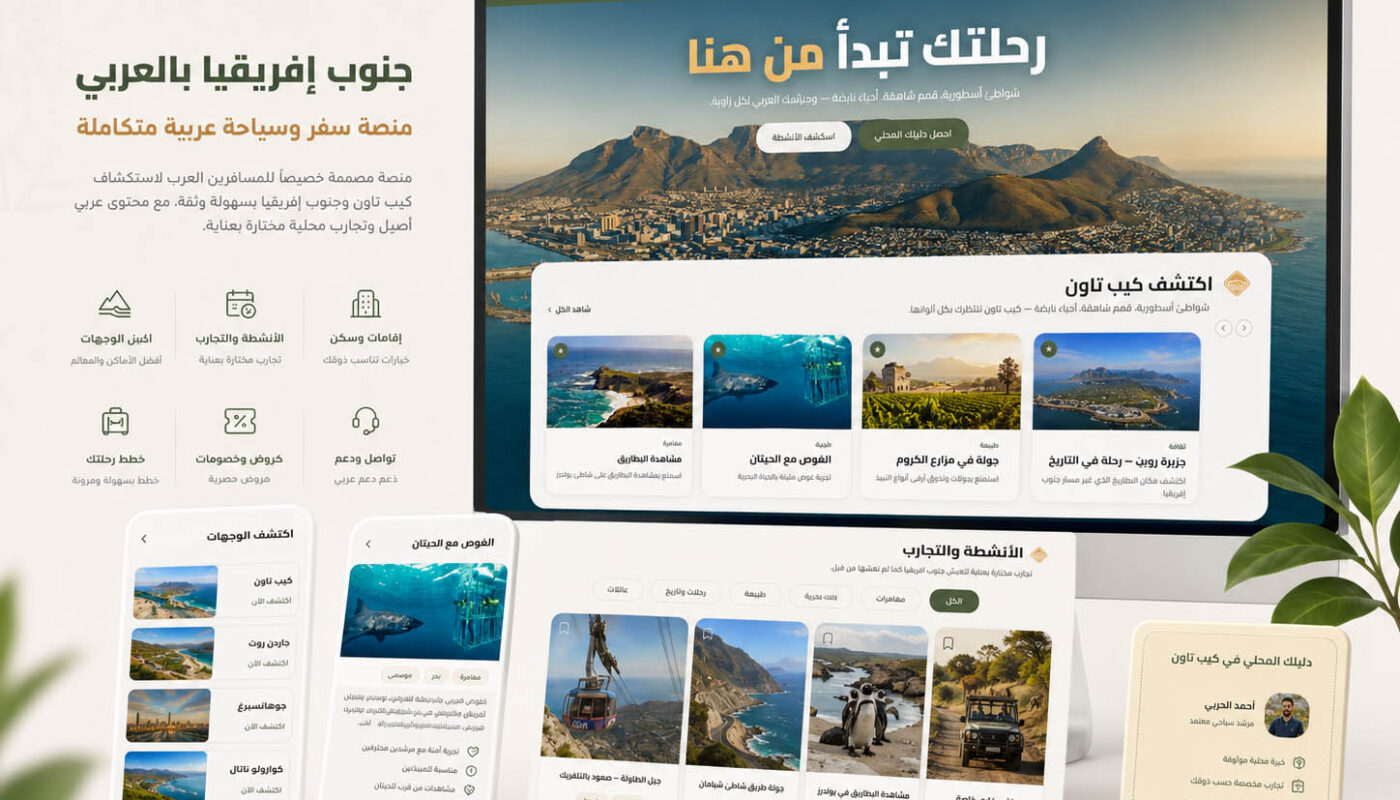
The hero tagline reads رحلتك تبدأ من هنا — “Your journey starts here.” Not translated from English, but composed in Arabic with the rhythm that Arabic readers expect. The same care extends through every page: destination descriptions, activity briefs, neighbourhood guides, traveller tips. Where pricing appears, it shows in Saudi Riyal — the currency the audience actually thinks in.
A local guide section introduces Ahmed Al Harbi, a licensed tour guide who speaks Arabic fluently — visible on the homepage, present on destination pages, contactable directly. For an Arabic traveller arriving in a country where Arabic is rarely spoken, seeing a familiar face who’ll be there in person is the difference between “interesting holiday” and “trip we’re actually going to take.”
Destinations & experiences, curated
The platform leads with Cape Town and expands to the Garden Route, Johannesburg, Kruger, and KwaZulu-Natal — five primary destinations, each with deep content. Within each: top attractions, signature activities, accommodation options, food and culture, traveller tips, and seasonal recommendations.
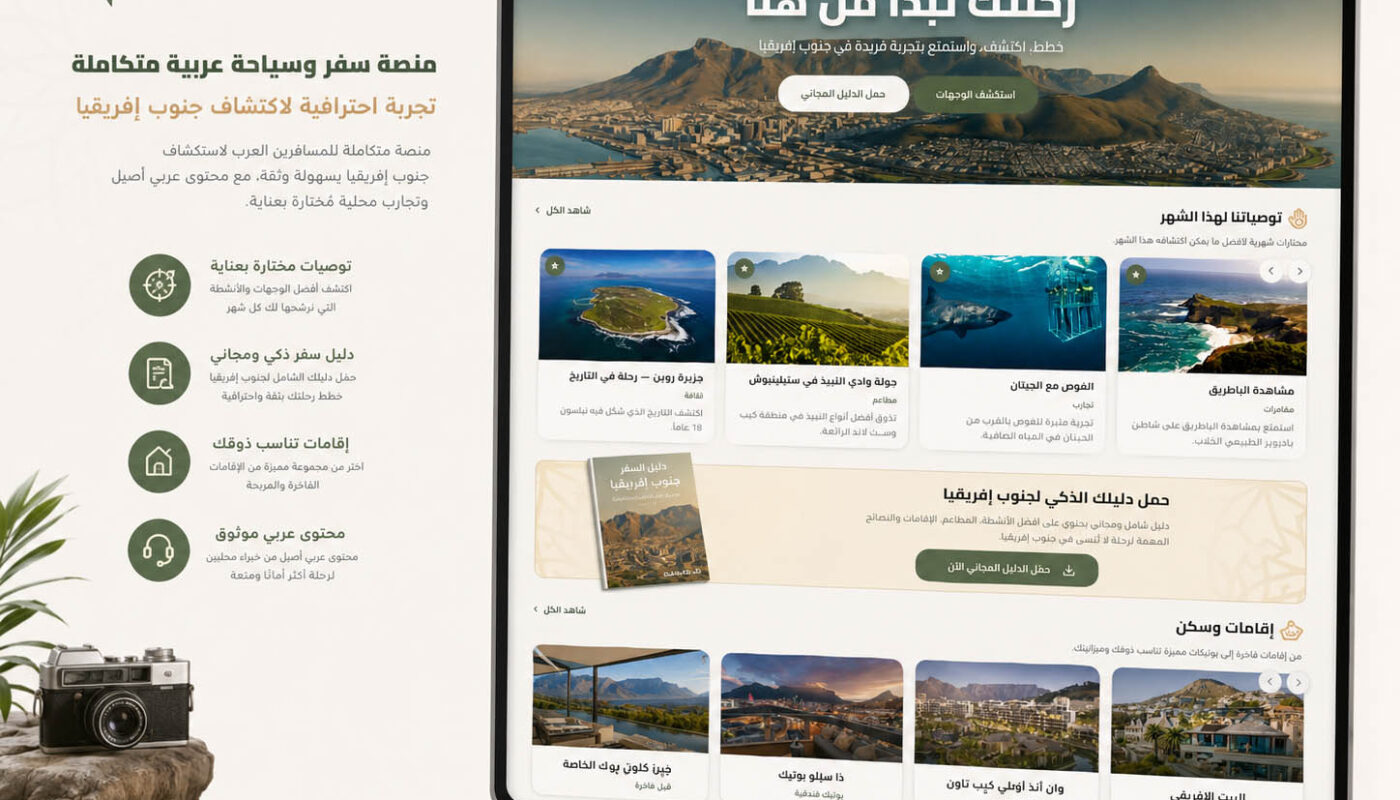
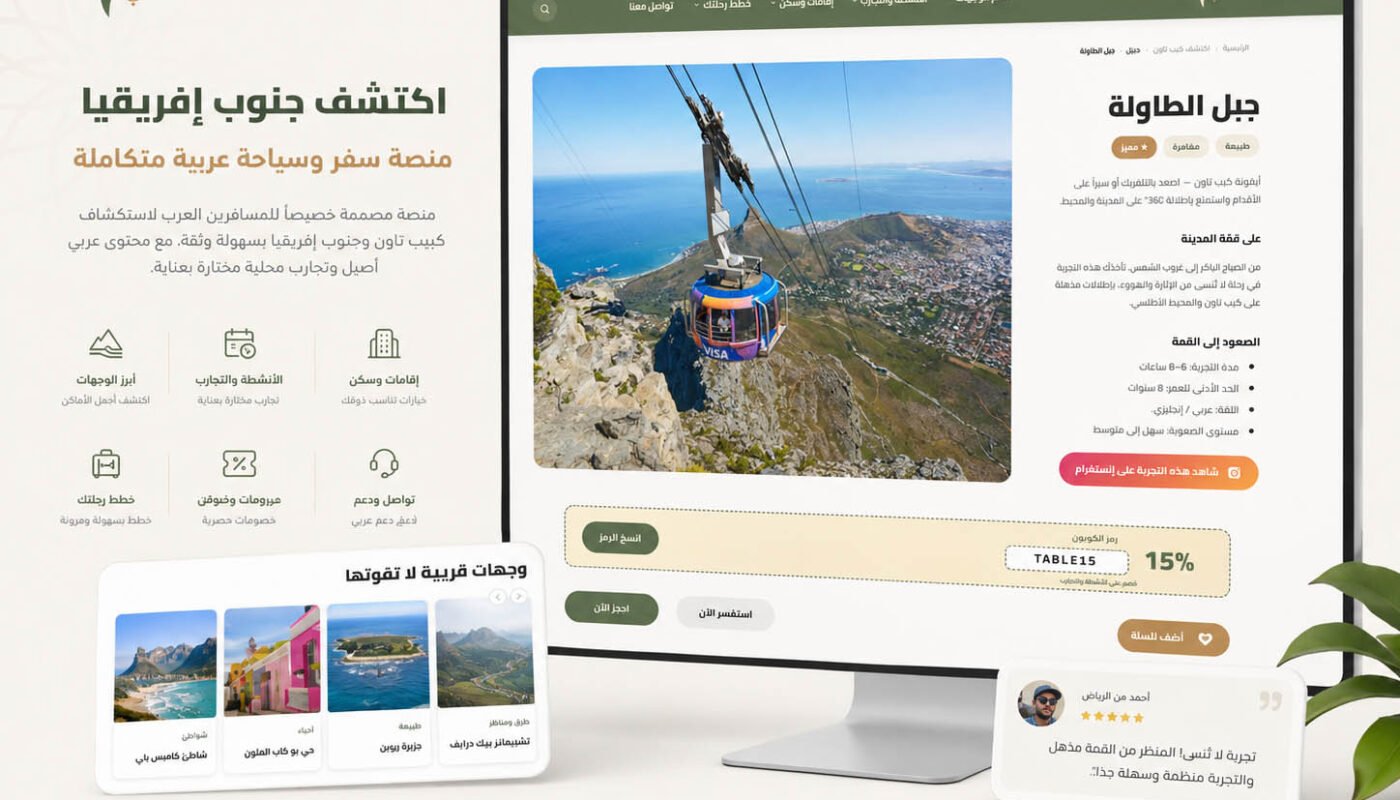
The activities and tours section is browsable by category: nature, adventure, sea, family, history & culture, sea travel, popular. Each card surfaces the essentials — duration, price, family-friendliness — and routes through to a detail page with photos, full descriptions, traveller reviews, and a one-tap booking enquiry. The دليلك المحلي (Your Local Guide) panel sits alongside, ready to answer questions in Arabic.
A booking system that supports the trip
Booking enquiries flow through a structured form: destination, arrival and departure dates, number of travellers and rooms. From there the team takes over — answering questions, refining the itinerary, recommending stays. The platform isn’t trying to be Booking.com; it’s trying to be the trusted Arabic-speaking friend who knows Cape Town and wants to help you have a great trip.
Promotional offers and discount coupons sit visibly on destination pages (the TABLE15 coupon for 15% off Table Mountain activities is a representative example). Each offer is paired with the activities it applies to, so a traveller browsing Table Mountain doesn’t have to hunt for a code in a separate “deals” page that they’d otherwise never visit.
A CMS the team can actually use
Tourism content is seasonal. The recommendations that work in December don’t work in June. Promotional pricing changes; new activities get added; popular destinations get expanded coverage. We built a dedicated CMS so the team can manage all of that without engineering involvement — new destinations, new activities, new accommodation listings, new offers, new content posts, all maintained in Arabic with full WYSIWYG editing.
Monthly recommendations on the homepage are managed through the same CMS. As the seasons shift in South Africa, the highlighted destinations and activities update with them. The platform stays fresh without needing a re-launch every quarter.
Trusted by travellers, built by people who care
Arabic-language web work is often treated as an afterthought — a translation layer over an English-first product. South Africa in Arabic was built the other way around: the audience came first, the language came first, and every technical decision was held to that standard.
Five weeks from kickoff to launch: 30 pages designed and built, 15 platform features, 5 destinations curated with rich Arabic content, and a CMS structure designed to grow with the business. A trusted gateway between the Arab world and South Africa, in a language that travellers actually read.