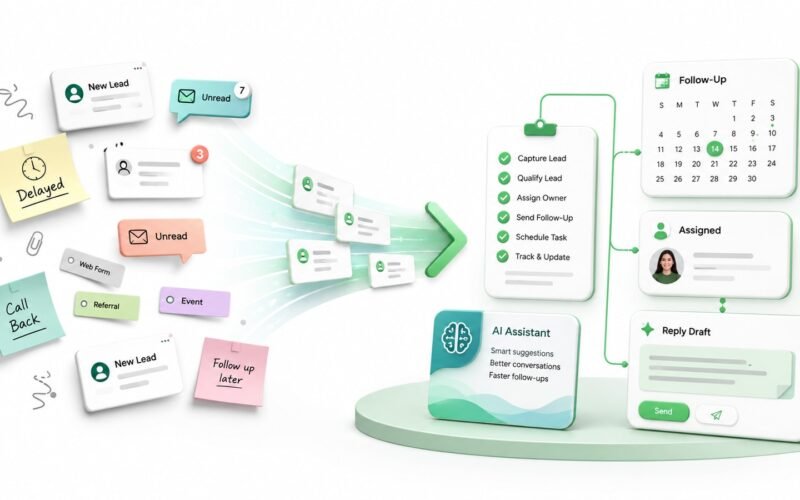
Many service-based businesses do good work, finish the project, send the final invoice, and move on. The problem is that the market never sees enough proof. The team has screenshots, photos, messages, results, process notes, before-and-after examples, and client feedback, but those assets stay scattered across phones, folders, chats, and inboxes. Over time, the brand begins to look quieter than the work behind it.
The visual proof framework is a simple way to change that. It helps businesses turn completed client work into clear, organised, trust-building brand content. Instead of treating every project as a one-time delivery, the business treats each project as a source of proof that can support the website, social media, proposals, sales presentations, case studies, and future client conversations.
Why visual proof matters for service business branding
Service business branding is not only about having a logo, colour palette, and polished profile. It is also about helping people believe that the business can deliver. For many buyers, especially in service industries, trust is built through visible evidence: real projects, clear processes, consistent presentation, useful insights, and proof that the team understands practical problems.
This is where many brands lose value. They invest time in delivery but do not capture the evidence properly. A completed website, campaign, video, system, photoshoot, brand identity, or digital platform can create many brand trust signals if it is documented well. Without a project content workflow, the strongest proof often disappears after the handover.
The visual proof framework
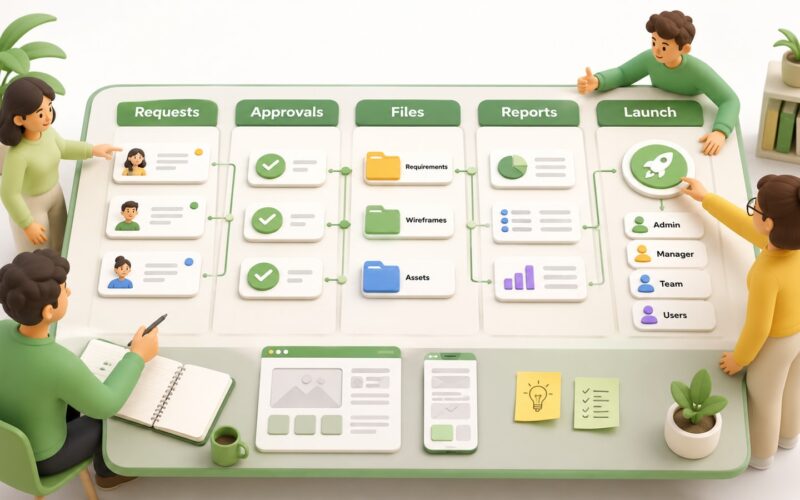
The framework has five stages: capture, select, structure, adapt, and publish. It is designed for small teams that do not have a full content department but still need a repeatable way to show expertise after each completed project.
1. Capture proof before the project disappears
The best time to collect proof is before the team closes the project folder. Create a simple handover checklist that captures the most useful evidence while the work is still fresh.
- Final visuals, screenshots, photos, screen recordings, or mockups
- Before-and-after examples where relevant
- Short notes explaining the client problem and the solution
- Client comments, approvals, feedback, or testimonial requests
- Measurable outcomes only where they are accurate and approved
- Team process notes that explain decisions, challenges, and improvements
This does not need to be complicated. A shared folder, project form, or content intake template is enough to begin. The goal is to prevent valuable proof from being lost across chats and devices.
2. Select the strongest evidence
Not everything from a project should become public content. The team should choose the evidence that makes the business look credible, useful, and commercially relevant. Strong visual proof usually shows one of four things: the quality of the final output, the thinking behind the work, the problem solved, or the client experience.
For example, a web design project may produce a homepage mockup, a mobile layout, a sitemap, and a short note about improved user flow. A branding project may produce colour systems, typography choices, application mockups, and a short explanation of how the identity supports consistency. A systems project may produce workflow diagrams, clean dashboard screens, and a simple explanation of how the platform reduces manual admin.
3. Structure proof into reusable content assets
Once the best evidence is selected, organise it into a visual identity system for proof. This means creating standard formats that make every project look consistent without making every post look identical.
A practical structure could include a one-page portfolio card, a short case study summary, three social media slides, a proposal proof block, and a website project entry. Each format should use consistent spacing, typography, colour, image treatment, and caption style. This keeps the brand current while making content easier to produce.
The key is to separate the proof from the platform. One project should not create only a social post. It should create a small content pack that can be reused across the website, LinkedIn, Instagram, sales decks, email proposals, and internal reports.
4. Adapt the message for each channel
The same project proof should be shaped differently depending on where it appears. A website portfolio entry needs clarity and detail. A social post needs a simple hook and visual impact. A proposal needs relevance to the client problem. A sales presentation needs fast proof that the team has solved similar challenges before.
This is where AI and automation can help without replacing human judgement. A team can use AI to summarise internal project notes, generate content variations, organise captions, or prepare first-draft case study sections. However, the team should still check accuracy, remove vague claims, protect client confidentiality, and make sure the final content sounds human and specific.
5. Publish through a simple monthly rhythm
A visual proof framework only works when it becomes part of operations. Add a short review step after each completed project, then schedule approved proof into a monthly publishing rhythm. This could be one portfolio update, two social posts, one proposal asset, and one internal reference card per month.
Small teams should avoid waiting for a major campaign before sharing proof. Consistent, modest publishing is better than collecting months of work and never releasing it. A brand looks more active and credible when its client work portfolio is updated regularly and presented with care.
A simple checklist to
- Capture: Save final visuals, project notes, approved feedback, and outcome details.
- Select: Choose the assets that best show quality, process, problem-solving, or client confidence.
- Structure: Place the proof into reusable templates for website, social, proposals, and presentations.
- Adapt: Rewrite the message for each channel instead of posting the same caption everywhere.
- Publish: Add proof updates to a monthly content workflow so the brand stays visible.
What this looks like in practice
Imagine a small digital studio completes a client website. Without a framework, the project may only appear as one quick post. With the visual proof framework, the team captures homepage screenshots, mobile views, content structure notes, a short explanation of the business challenge, and approved client feedback. Those assets become a website portfolio page, a short social carousel, a proposal insert for similar clients, and an internal sales reference.
The result is not more content for the sake of content. It is a stronger brand memory. Every completed project becomes visible evidence of capability, consistency, and experience.
Building proof into the brand system
Branding should not end at identity design. For service businesses, the brand becomes stronger when the visual system includes how proof is collected, designed, named, stored, and reused. This makes the brand feel current and trustworthy because the business is not only saying what it does. It is showing how it delivers.
Digivolve Media helps businesses connect brand identity, websites, content workflows, digital platforms, and practical automation into systems that are easier to manage and easier to trust. A visual proof framework is one of the simplest ways to make good work more visible, organised, and useful for growth.